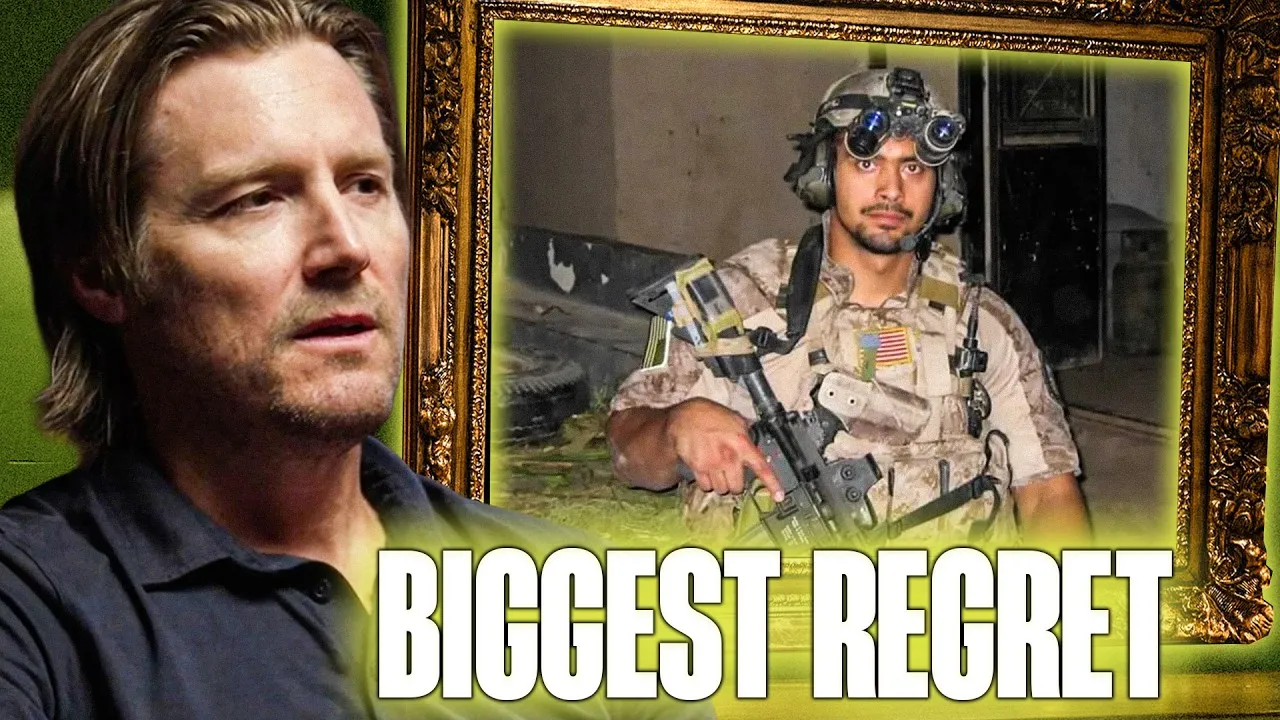
A former SEAL Team 6 operator says his only regret is not sharing his faith with Louie before Louie died two nights later
The combat story is brutal, but the confession is stranger: he says the fear that still haunts him was not the door, it was the conversation about God he avoided.
Listen on YouTube · Spotify · Apple Podcasts
 WATCH NOW↓
 A former SEAL Team 6 operator says his only regret is not sharing his Christian faith with Louie, a teammate who died two nights later. Not the blast. Not the room full of Al-Qaeda. The conversation he ducked.
It’s my only regret. Like I didn’t share my faith with him, and he was just asking me he was kind of like beating around the bush just asking me what I believed and why.
That is the reason this clip from The Shawn Ryan Show has teeth. Veteran podcasting is full of door stacks, blast waves, and thousand-yard-stare mythology. This one has all of that, but the guest’s moral injury is theological. He describes surviving a house-borne IED, being blown away from a window and into a compound wall, then waking up to find his assault team crushed and Louie dead. The part he keeps circling is not why he survived. It is why he stayed quiet.
The fear was not the door
The guest frames his regret with a sharp little reversal: courage in combat, fear in confession. He says Louie had been asking, indirectly, about what he believed and why. The guest says he worried he did not have all the answers, so he changed the subject. A pastor later gave him the phrase that now seems to organize the whole memory.
I’ve had a pastor since tell me like in those instances we don’t need to be lawyers, we need to be witnesses.
That line is doing real work, in the best and most revealing sense. He is not saying he failed to win an argument. He is saying he failed to testify. If you do not share his faith, the guilt may sound misplaced, even punishing. But inside the logic of evangelical Christianity, it is brutally coherent: the worst missed opportunity is not saying what you believe when someone is searching.
It also cuts against the usual special-operations brand of regret. This is not a lesson about tactics, gear, command decisions, or who should have been on the door. It is a man judging his younger self for being more willing to absorb bullets than embarrassment. That is a very specific kind of American masculinity, wearing body armor and a cross necklace, suddenly realizing the softer fear was the one that won.
Faith becomes the operating system
The guest says he now gives the first hour of every day to prayer, Bible reading, journaling, stillness, solitude, and silence. He claims it makes him sharper at work, better in training, clearer in his mind. He even says he thinks he would have been a better SEAL if he had done it while he was still in the teams.
That part is both plausible and impossible to prove. A daily hour of quiet discipline probably would make many people less reactive and less fried, whether they call it faith, meditation, journaling, or simply not grabbing a phone before sunrise like a raccoon attacking a trash can. But he is not selling mindfulness with a beard and a cold plunge. He is saying the source matters. The hour works, to him, because it is given to God.
The PTSD claim needs a raised eyebrow
The boldest stretch comes when he talks about combat trauma. He says he has medical issues and likely brain issues from IEDs, grenades, guns in kill houses, and parachute jumps. But he says he does not suffer from the nightmares, sleep struggles, or brain fog he hears other operators describe.
I have none of it. Like I don’t even have nightmares about what I saw or what I did and I attribute that to my faith.
That is testimony, not clinical evidence. Combat trauma does not politely exit the building because someone found the right morning routine. PTSD is not a math problem with a devotional answer key. But as a window into how this particular man metabolizes survival, the claim is more interesting than a generic healing arc. He is not saying the war did not mark him. He is saying the mark he feels most is the silence before Louie’s death.
I wasn’t afraid to run into a room full of Al-Qaeda for the flag that I wore on my shoulder, but I was afraid to share my faith for that cross I wore underneath my body armor.
- What exactly does the former SEAL Team 6 operator regret?
- He says Louie was gently asking about his beliefs, but he changed the subject because he felt unprepared to explain his faith. Two nights later, Louie was killed after a building exploded during an operation. The guest calls that failure to speak plainly about Christianity his only regret.
- Why does he say faith made him a better operator?
- He says he now spends the first hour of his day praying, reading the Bible, journaling, and sitting in silence, and he believes that practice gives him clarity, energy, and steadiness. He goes as far as saying he thinks he would have been a better SEAL if he had lived that way while he was still in the teams.
- Does he claim faith prevented PTSD?
- He says he does not have nightmares or the sleep problems and brain fog he associates with operator trauma, and he attributes that to his faith. That is a personal claim, not medical proof. The careful read is that faith gives him a framework for guilt and survival, not that it works as a guaranteed cure for combat trauma.
Five Guests on the Secret to a Good Marriage, and One of Them Is Actually Right
Shawn Ryan asks five people the same question and gets five answers that range from profound to a GPS dog collar ad.
Brian Keating says UFO disclosure is “bread and saucers” distraction, not alien evidence
The physicist’s best point isn’t that aliens are fake. It’s that teasing civilization-shaking secrets while showing no data is a cheap trick with a saucer on it.
Shawn Ryan says he went through four exorcisms after a psychedelic vision of hell
The former Navy SEAL and podcast host frames his recent supernatural experiences as a reason to push harder into Christianity, while Bishop Joseph Strickland calls it spiritual warfare.
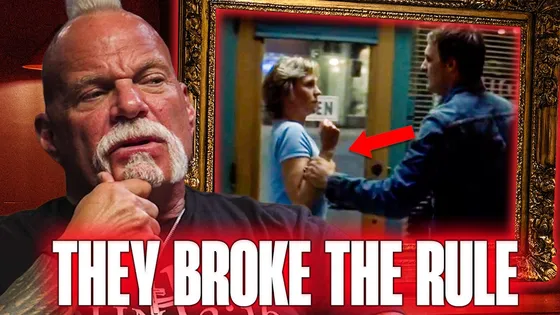
Mel Chancey says the Outlaws broke bikers' “no homes and no families” rule by beating a girlfriend
The former Hells Angels figure describes a biker feud code that sounds like restraint until you hear what happened when someone crossed it.
The circuit, read weekly. No noise.