Dan Aykroyd Hosts History's Weirdest Omnibus, and It Actually Works
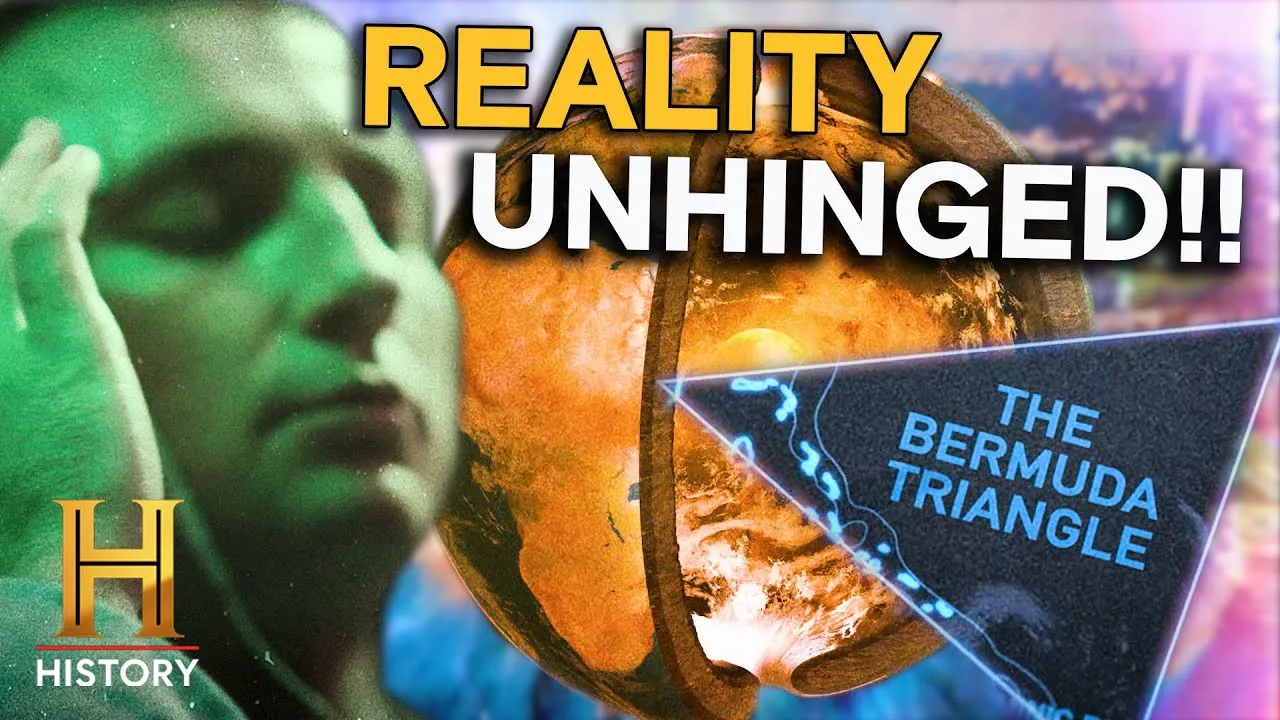
Hollow earth theory, psychic Cold War spies, and a ghost who got her husband convicted: the Unbelievable with Dan Aykroyd is exactly as unhinged as it sounds.
Listen on YouTube
 WATCH NOW↓
 John Quincy Adams, with an IQ estimated at 175 and seven languages under his belt, very nearly sent a federal expedition to find the mole people. That is the first story in this episode of The Unbelievable with Dan Aykroyd, and it is not even close to the strangest one. This is a show about history’s most embarrassing footnotes and most genuinely unsettling loose ends, and Aykroyd, who has believed in this stuff his whole life, is a more credible guide than you’d expect.
The hollow earth segment plays mostly as comedy, and it earns it. A theorist named John Cleves Symmes wrote a pamphlet in 1818 calling for 100 brave volunteers to dig toward the subterranean world, promising them riches and, memorably, thrifty vegetables. The show can’t resist: “I guess this is what a world looks like before the discovery of gold, that the chance for riches comes in the form of thrifty vegetables.” Adams got voted out before any digging started. Andrew Jackson, as the episode notes with a dark efficiency, was too busy with above-ground problems to worry about subterranean ones.
The Government Paid People to Spy With Their Minds
The Operation Stargate section is where the episode stops being funny and starts being genuinely strange. The U.S. Army, during the Cold War, ran a remote viewing program out of Fort Meade, Maryland, training a small group of men to psychically locate Soviet missile silos and submarines. The show claims a success rate of 70 to 80 percent, which sounds like propaganda until you hear the detail about a remote viewer named Joseph McMoneagle sketching a new class of Soviet ballistic missile submarine six months before it was publicly announced. His colleague Pat Price supposedly infiltrated an underground Soviet nuclear research site from a room in Maryland. The CIA officially shut the program down in 1995. Officially.
There is a theory that this is a classic black op. It’s still going on, but it’s buried somewhere in the private sector.
The episode doesn’t linger there. It pivots to mailing children through the U.S. Postal Service, which was briefly legal in 1913, and then to the Valley of the Headless Men in Canada’s Nahanni National Park, where four prospectors across four decades were found decapitated with no obvious explanation. The Dene people who had lived near the region for 8,000 years had a reason they never settled in that particular valley, involving man-eating giants called the Nani. The Royal Canadian Mounted Police’s counter-theory, that grizzly bears specifically targeted the heads of multiple men across multiple decades, is not more reassuring.
A Ghost Testifies, the Jury Believes Her
The episode’s best story is last. In 1897 West Virginia, a woman named Zona Shue dies at the bottom of her stairs. Her husband Erasmus, a blacksmith everyone called Trout, is so hysterical at the scene that the coroner never actually examines the body. Trout dresses her himself, in a high-collar dress with a scarf around her neck, and buries her the next day. Weeks later, Zona’s mother starts seeing her dead daughter in the bedroom, four nights in a row, Zona pointing at her own throat. The mother pushes for an exhumation. They remove the scarf. Strangulation marks.
Zona Shue’s case is the only time in recorded history of the state that a ghost actually provided testimony that resulted in the conviction of their killer.
Trout is convicted and sentenced to life. The forensics backed the ghost, and the jury knew it. It’s a real case, documented in West Virginia legal history, and the show presents it straight, with no winking. That’s the right call. The story doesn’t need help.
Sandwiched between the ghost trial and the headless prospectors is a segment about a New Jersey reservoir that has swallowed 26 people, left most of the bodies unfound despite submarines and FBI searches, and in 2012 yielded a boot containing what appeared to be human remains that could not be identified. The show offers a dry exit line: “That foot could be anybody’s.” At 50 miles from Newark, a very deep lake is, the episode points out, convenient. The Unbelievable is at its best when it lets a genuinely weird fact sit there without overselling it. That foot. Just sitting on the line.
He tells his mother that his wife Uma wears much nicer saris than she does. His home in Agra is bigger and cleaner and nicer.
The reincarnation story out of India, where a child named Titu appeared to have detailed memories of a murdered radio shop owner named Suresh, including the make of his car and the identities of his killers, is the one that lingers. Courts in India accepted the reincarnation evidence. Police located the two men. They were convicted. Whether or not you believe a four-year-old remembered a past life, two killers went to prison partly because of what he said. That outcome is real regardless of the explanation, and the show is smart enough to let that tension breathe.

Dan Aykroyd and John Belushi in 1978: Two Guys Who Weren't Sure the Show Would Last Seven Episodes
A newly surfaced interview captures the Blues Brothers at 26 and 29, still sleeping on foam slabs and genuinely unsure if any of this was going to work out.
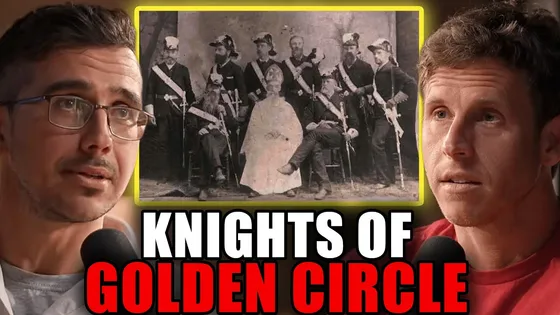
Matt Ehret says 'Ku Klux' is Greek for 'circle,' making the KKK a straight rebrand of the Confederate secret society that killed Lincoln
A Canadian historian walks into a podcast and explains that John Wilkes Booth was probably Manchurian-Candidated in Montreal, and that the KKK is just the Golden Circle with a new logo.
The circuit, read weekly. No noise.