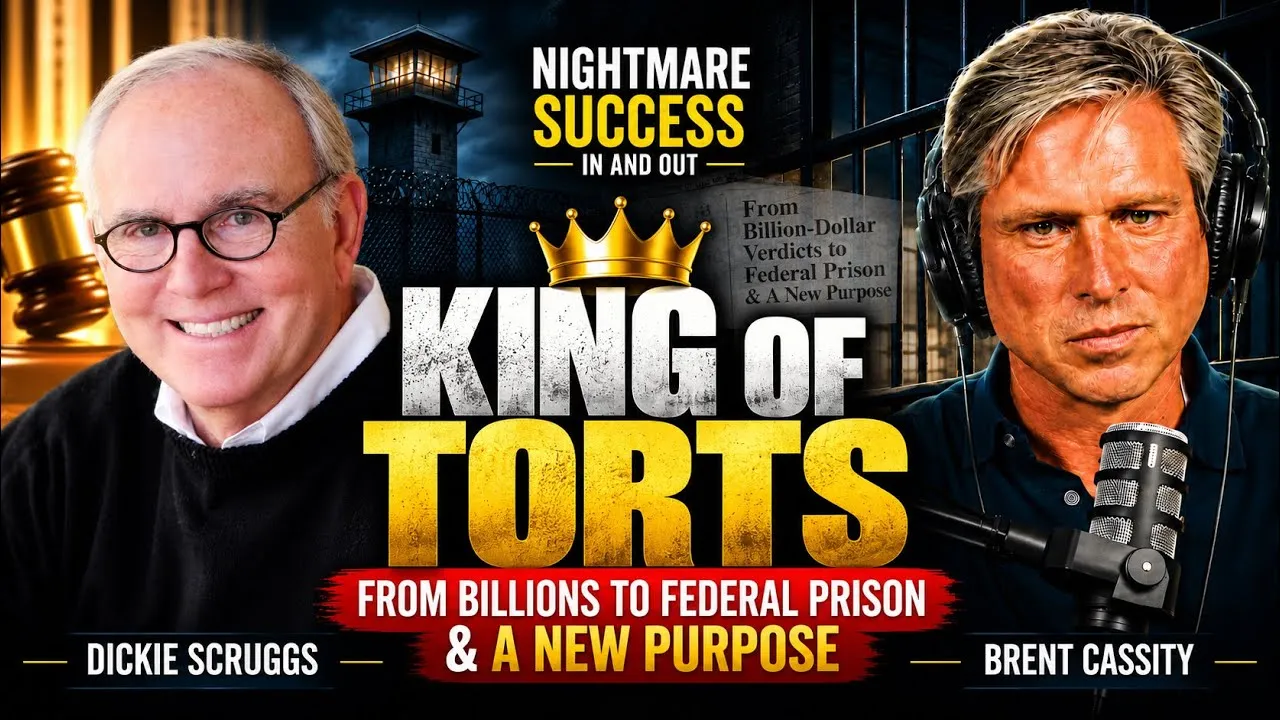
Dickie Scruggs says inmates were relieved he was a 'real criminal' and not a child molester
The former King of Torts gives a bleakly funny account of how status works inside federal prison, where even disgrace has its own hierarchy.
Listen on Nightmare Success · YouTube
 WATCH NOW↓
Dickie Scruggs, once the legal world’s cigar smoking giant killer, says his prison reputation was saved by one of the bleakest endorsements imaginable: a respected inmate vouched that he was there for bribery, not a sex offense. On Nightmare Success, Scruggs describes federal prison as a place where even ruin has a caste system, and where the line “real criminal” can sound, somehow, like a compliment.
In prison, disgrace has a pecking order
Scruggs entered prison with a public identity already attached to him. He had been the “King of Torts,” the Mississippi lawyer tied to asbestos cases, the state tobacco suits, Hurricane Katrina insurance fights, and then a federal bribery conviction. Outside prison, that is a catastrophic résumé. Inside, according to Scruggs, the first problem was more basic: nobody knew which kind of catastrophic he was.
He says he expected a prison camp but was sent instead to the low security facility at Ashland, Kentucky. The distinction matters. In his telling, the prison housed men convicted of sex offenses, and those men were socially radioactive. Scruggs says he did not understand why people would not sit with him at meals until another inmate explained the suspicion.
كنت أظن أن الرشوة جريمة بشعة، لكنني لم أكن مثل تشارلز مانسون، أليس كذلك؟
Then came Bob Stone, the inmate Scruggs describes as the unofficial power center of the compound, a man respected enough that his word functioned like paperwork. Stone had read about Scruggs in The Wall Street Journal. The verdict inside was simple: bribery, not child molestation. Scruggs’s cellmate delivered the update like a weather report after a tornado missed the house.
يا رجل، أنت لا تعلم كم أنا سعيد لأنك مجرم حقيقي
This is grimly funny, but not cute. It is the nightmare version of LinkedIn verification. Scruggs is not saying prison ennobled him. He is saying prison sorted him, and the sorting was brutal, fast, and morally upside down. His claim rings true because it is too specific to feel polished. It also flatters him a little. Even at the bottom, he gets to be placed in the better category of bad men.
The King of Torts still knows how to frame a case
That is the Scruggs rhythm throughout the episode: admit enough to sound chastened, frame enough to remain the lawyer. He refuses to relitigate his conviction in detail. He says he pleaded guilty, served his time, and decided not to become the guy cornering people on sidewalks to explain why he had been wronged. Good choice. Nobody enjoys appellate cosplay at a dinner party.
Before prison, Scruggs’s life had the scale of a John Grisham fever dream. He talks through the asbestos clients who began arriving after work hours, the gamble of paying for medical screenings when other lawyers would not, and the tobacco strategy that helped states seek reimbursement for Medicaid costs. The key legal turn, as he explains it, was moving the fight away from the smoker’s choices and toward the state’s costs. The state, as the famous theory went, does not smoke.
His account of tobacco litigation is still charged with the old thrill. When one tobacco company broke ranks and settled, the dam cracked. Scruggs says the victory was not mainly about money, but about doing something unmistakable. Then he admits what success felt like.
كان الأمر مبهجًا، هذا كل ما يمكنني قوله. كان الأمر أشبه بالسكر.
There is a deliciously perverse detail here: he says he celebrated the tobacco breakthrough by lighting a cigar. Of course he did. If you are building the plaintiffs’ lawyer Mount Rushmore out of pure Southern contradiction, that is the chiseling sound.
Redemption, but with the hard part left in
The episode gets better when Scruggs stops sounding like a legend and starts sounding like a man trying to make prison hours move. He became a GED math tutor, relearning geometry and algebra so he could teach men who needed a credential. This is where the show’s redemption frame earns some weight. Purpose is not a slogan in his account. It is a way to survive Tuesday.
أسوأ ما في دخول السجن ، إلى جانب الانفصال عن العائلة، هو فقدان المرء كل إحساس بالهدف .
After release, Scruggs says that prison tutoring led him toward Second Chance Mississippi, which supports adults pursuing high school equivalency and workforce training. He is careful to add something many redemption stories skip: money made his prison experience easier. His family was not ruined financially. His wife could visit. That does not erase prison, but it does put a governor on the inspirational music.
The strange value of the “real criminal” story is that it refuses the clean version. Scruggs’s second act is tied to second chance education, yes, but his first prison victory was more primitive. He needed the room to know what kind of inmate he was. If you are headed into federal prison, his lesson is brutal and practical: know what people think your paperwork says, then find a job in the room that makes you useful.
- What did Dickie Scruggs say about prison inmates?
- Dickie Scruggs said that during his first week at FCI Ashland, other inmates would not sit with him because they apparently assumed he was a sex offender. He said that changed only after a respected prisoner, Bob Stone, told people Scruggs was there for bribery. His roommate then told him he was relieved Scruggs was a “legitimate criminal,” which is about as grimly funny as prison social clearance gets.
- Why was Dickie Scruggs in federal prison?
- Scruggs said he pleaded guilty in a case involving conspiracy to bribe a judge and served a six-year sentence. He did not try to relitigate the case on the podcast, saying he decided not to complain or explain after coming home. That restraint helps the interview, even if it also lets him keep the ugliest legal details at arm’s length.
- What did Dickie Scruggs do after prison?
- Scruggs said he started helping with GED and workforce training efforts in Mississippi after tutoring inmates in prison. That work became Second Chance Mississippi, a nonprofit that supports community college students with high school equivalency, workforce certification, and practical needs like transportation or child care.

Jennifer Michelle Helms says she went from HGTV interior designer to a four-year federal prison sentence
The Nightmare Success episode frames Helms’s fall as a brutal reversal: a designer who once visited her father in prison later ended up serving time herself.
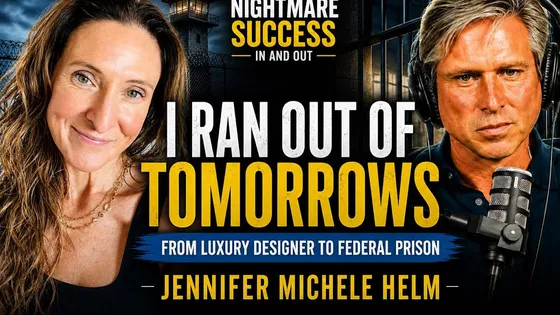
Jennifer Michele Helm says she found out she was federally indicted by email after smoking a joint in Laguna Beach
The former luxury interior designer describes federal fraud charges arriving not as a dramatic knock at the door, but as an email interrupting a very California morning.
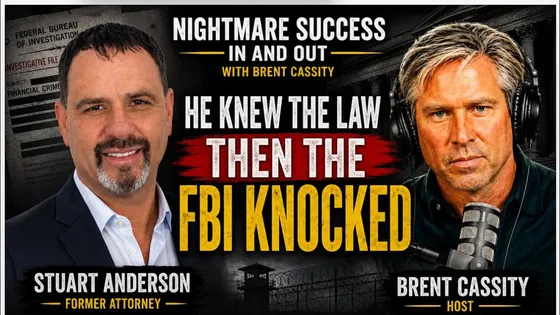
Stuart Anderson says admitting he saw red flags helped turn him into a federal fraud defendant
The former attorney says he thought he was helping investigators, then walked himself straight into the legal phrase every white-collar defendant learns too late.
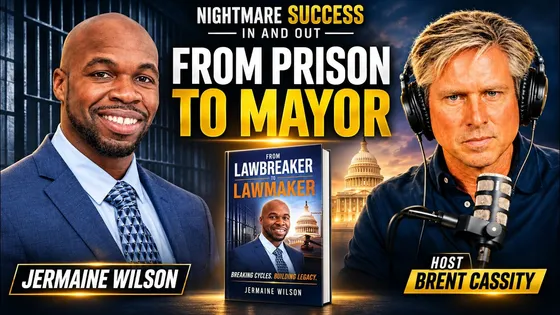
Jermaine Wilson says he got both the key to Leavenworth and the key to his old prison cell house
The former mayor of Leavenworth turned his second chance story into an almost absurdly perfect symbol, one key from the city, one from the prison.
The circuit, read weekly. No noise.