Mike Birbiglia Knows He Might Be Mediocre and Has Made a Kind of Peace With It
Two narrative comedians sit down to talk about control, cancer, and why nobody is watching your old special.
Listen on YouTube
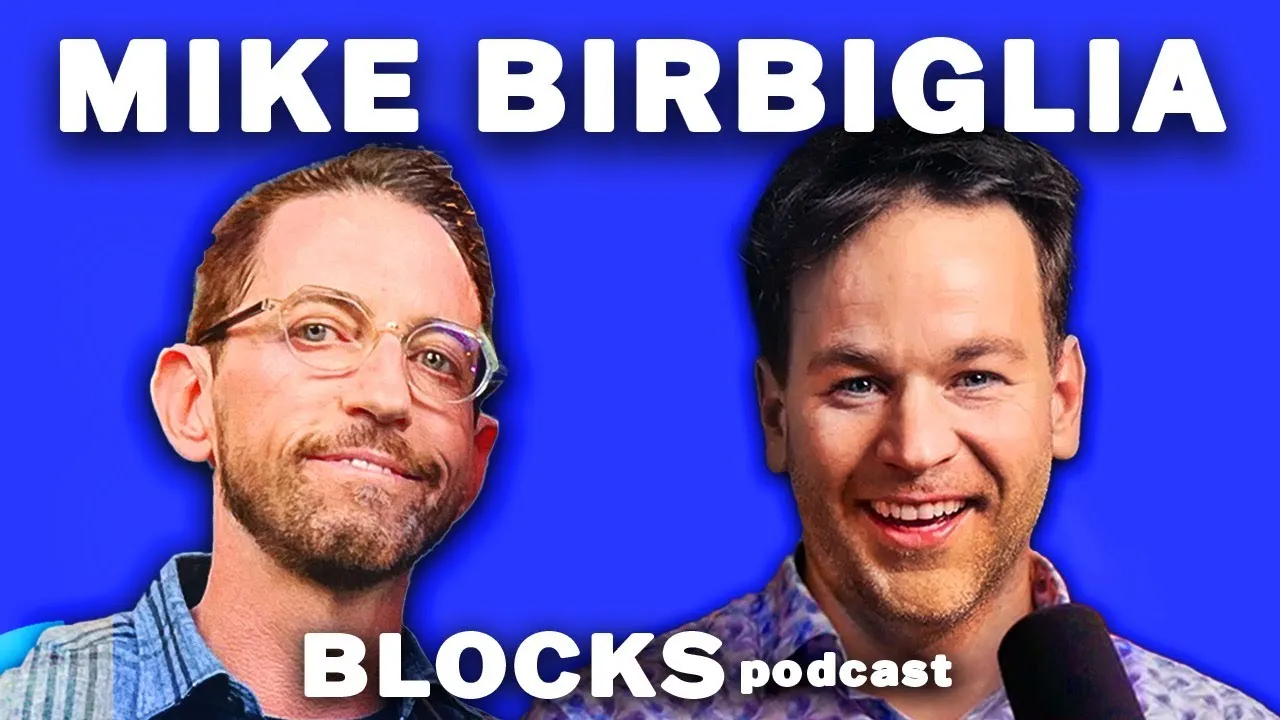 WATCH NOW↓
 Mike Birbiglia is afraid he might be mediocre. He knows how that sounds. He says it anyway, on a podcast, in front of a microphone, which is either brave or so self-aware it laps itself and becomes a bit. Probably both. That tension, between the fear and the performance of the fear, is basically the whole game when two comedians who have spent decades mining their own damage sit down and call it a conversation.
Neal Brennan’s Blocks format asks guests to name their psychological sore spots and then poke them for an hour. Birbiglia arrives with a prepared list: lack of control, inability to live in the present, fear of mediocrity, fear of letting people down, discomfort being himself offstage. It reads like a therapy intake form written by a very funny person. What makes the episode work is that neither of them treats the list as a confession. They treat it as material, which is what comedians do with everything, including their own worst qualities.
The Control Problem
Birbiglia took an autism spectrum test. The minimum score to qualify is 26. He got a 26. He seems, if not proud exactly, then at least relieved to have documentation. What the number describes in practice is a man who stress-tests his Edinburgh Airbnb walking route four months in advance on Google Maps, and then catastrophizes about a street closure in the West End.
I’m Google like Google mapping was the worst thing that ever happened to people like me. I’m just like okay made it right, okay so this is like the Danish Pastry up on this corner and then I walk by here and I walk… well what if what if there’s no, what if this shut, this whole block is shut down cuz it’s the West End.
Brennan has the same wiring and they both know it, which means instead of one person explaining a problem to someone who doesn’t have it, you get two people trying to describe water to each other. The conversation keeps almost arriving at a conclusion and then wandering back into the example. They talk about David Letterman’s pre-show rituals, about a commercial Birbiglia directed where the crew wasn’t hitting the shot, about Half Baked getting taken away from Brennan and Dave Chappelle and what it cost them afterward. The throughline is always the same: the thing that makes you good is the thing that makes you miserable, and there is no clean way to separate them.
It feels like a hot stove if somebody’s not doing the thing I need, the thing that we talked about, the thing we agreed to and they’re not doing it feels like a hot stove and you’re getting to the point where you’re going like you know what stove, would you mind taking yourself down a few degrees.
Nobody Is Rewatching Your Special
There is a genuinely bracing stretch where they talk about posterity and both arrive, somewhat reluctantly, at the conclusion that it does not exist. Birbiglia designs his shows to age well, cuts anything topical, thinks about whether something will hold up the way Eddie Murphy’s 1980s specials do. Brennan points out that almost no one is watching those Eddie Murphy specials. They go back and forth on someone who was, in their telling, basically Bob Dylan of the solo show circuit in the 1980s, a person whose name neither of them can fully remember. That’s the bit. That’s the argument.
The comparison to Chris Rock’s Tambourine is the smartest thing either of them says about craft. Birbiglia makes the case that a special doesn’t need a full emotional arc, it just needs one or two moments where the punchline doesn’t come, where someone just tells the truth and lets it land. Rock talking about his divorce with no joke attached. The audience goes somewhere they didn’t expect and then respects everything around it more. Brennan is being nudged, gently, to let some air into his hour. He resists, also gently. Both positions are defensible.
The Part Where Someone Had Cancer
Birbiglia had a bladder tumor in his twenties. He removed it, it didn’t come back, he calls himself super lucky. He describes finding out the way you describe something that happened to someone else in a movie you were watching. Dissociation is the word he uses. What he’s reaching for is the gap between the person something is happening to and the person observing it happen, which turns out to be a pretty good description of how autobiographical comedy works in general. You need the distance to make it a story. The trick is not getting so far away that you lose the feeling.
It’s like you’re in a movie, you’re living, you’re the character in the movie and all of a sudden you’re watching the movie and you’re like that’s a sad movie, that’s how it felt.
The fear of mediocrity, which gets its own formal block slot, is actually the most interesting thing in the episode because Birbiglia knows the answer and keeps circling around saying it. Brennan offers it directly: the Craig Shakespeare thought experiment, the guy down the street whose sonnets don’t rhyme and whose mood is a 7.7 out of 10, versus William Shakespeare at a 4.8 and immortal. Who had the better life. Neither of them can make themselves answer Craig. They know they should. They’re constitutionally incapable of it. That’s the whole episode, really, in one hypothetical.
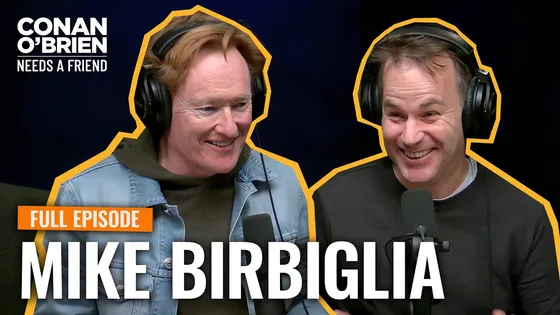
Mike Birbiglia and Conan O'Brien Compare Catholic Fathers, Pope Shoes, and What Kids Actually Think of Their Famous Parents
Two Worcesterites with doctor dads and a shared audience with Pope Francis spend an hour discovering they have basically lived the same life.
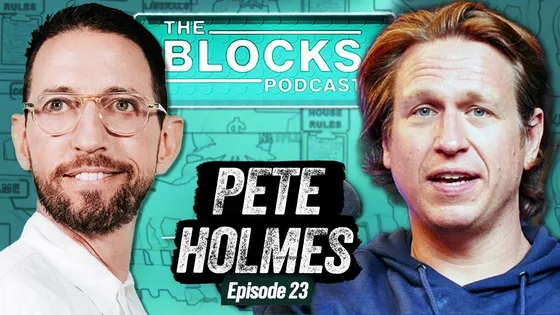
Pete Holmes Went to Ayahuasca, Neal Brennan Is Scared of His Dog
Two comedians closing in on 20 years of friendship talk God, plant medicine, body dysmorphia, and whether love is just a dog following a turkey leg.
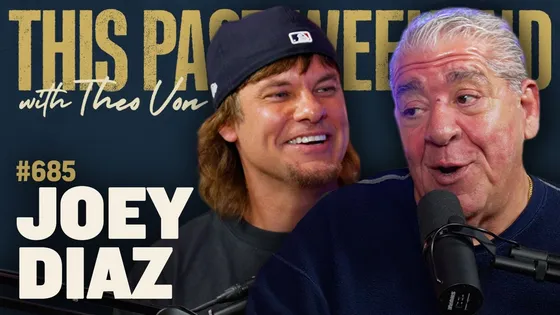
Joey Diaz says 19 years off cocaine gave him more than his first 44 years
Diaz turned a filthy, funny hang with Theo Von into a blunt sermon on sobriety, regret, and what finally showed up after the bag left.
Bill Maher says he was “particularly bad” at blaming audiences when his jokes bombed
On Club Random, Maher turns a comedy cliché into a little self-indictment, while Lisa Kudrow offers the healthier, actorly version of bombing.
The circuit, read weekly. No noise.