Patrick Bet-David says a $300,000 AI UBI would make most people miserable
A Ford AI quality-control story turned into Bet-David’s bigger anti-utopia: money without resistance is not freedom, it’s spiritual mush.
Listen on YouTube
 WATCH NOW↓
 The AI future on PBD Podcast did not arrive as Skynet. It arrived as Patrick Bet-David asking whether people would be happier if artificial intelligence got so productive that everyone could receive $300,000 a year and stop working, then answering his own question with a hard no.
That is the real claim here, not the Ford headline the clip is dressed in. Ford allegedly bringing back hundreds of veteran quality people after AI quality checks disappointed is the match. Bet-David’s bonfire is bigger: abundance without adversity would make people miserable.
AI has done such a good job that financially everybody’s taken care of and you just go live your life. Do you think people would be happier or no?
Ford becomes the anti-AI bumper sticker
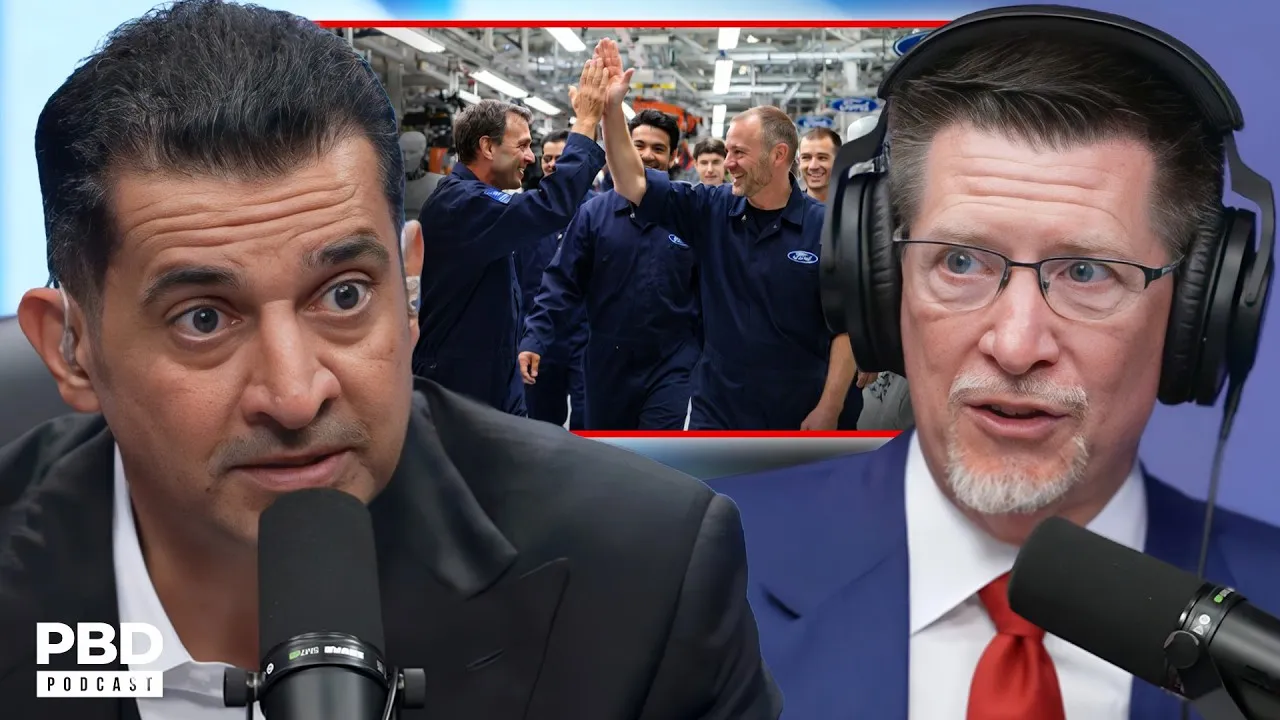
The segment starts with a tidy piece of Team Human propaganda: Ford, according to the story read on air, used AI-powered systems for quality checks, then brought back more than 300 veteran quality inspectors after the automated tools failed to meet expectations. The wording gets slippery. The show title says engineers. The readout says engineers, then quality inspectors. That matters, because replacing design engineers is not the same thing as replacing experienced plant-floor quality people who know what a weird defect feels like before a model has a name for it.
Still, the moral is easy to see. Artificial intelligence is very good at speeding up the boring parts. It is much shakier when the task involves messy physical reality, institutional memory, and a human who can say, with the authority of 20 years of seeing things go wrong, that something just looks off.
It’s just showing that AI is not coming for every job.
That’s the sensible version of the argument. AI is a tool, not a foreman. It can collect, sort, flag, and compress time. It cannot automatically replace the human chain of judgment that turns raw output into something that doesn’t rattle, leak, hallucinate, or embarrass the company. The panel gets that part right.
You never go full AI.
Then the AI debate turns into a sermon about comfort
Bet-David’s real obsession is not whether Ford Motor Company can train a better inspection model. It is what happens to human beings when the machine removes the need to strive. The Ford story becomes a gateway drug to the old American gospel of resistance: muscles need weight, entrepreneurs need failure, marriages need the possibility of divorce, soccer fans need humiliation, and children of rich parents need chores or they’ll become expensive houseplants.
There is a grim clarity to his worldview. Comfort is not just soft. Comfort is theft. It steals identity, dignity, edge. Bet-David is at his most persuasive when he talks about purpose as something money can’t hand you. He is at his most PBD when he takes a hypothetical universal basic income utopia and immediately drags SNAP, welfare, Obama-era unemployment, spoiled kids, and spiritual death into the same room.
I think majority would be miserable. There is there is no purpose in life if you’re not overcoming something difficult challenging.
The leap is huge. A society where AI produces so much wealth that nobody has to panic about rent is not automatically the same as a bureaucracy that traps people in dependency. Bet-David treats both as versions of the same poison, which makes the argument punchy and a little too neat. The best case against a $300,000 AI UBI is not that grocery security makes people weak. It’s that humans still need status, contribution, obligation, and difficulty after the bills are paid. That’s a sharper point, and it’s buried under a lot of bootstrap thunder.
Entitlement programs stole away her entire dignity. And you see it in her eyes today.
The contradiction is right there
Bet-David is not anti-AI. He says they use ChatGPT and language models. The panel even admits AI may be at only a tiny fraction of its eventual capacity. So the episode’s stance is less Luddite than it sounds. It is pro-tool, anti-substitution. Use the machine to speed up the spreadsheet. Don’t ask it to become your inspector, your spouse, your purpose, or your kid’s character-building hardship simulator.
The Ford anecdote supports the modest claim: companies that fire institutional knowledge too fast may end up buying it back at a premium. Bet-David uses it to make the grand claim: even infinite machine-made money would not save people from emptiness. The modest claim is proven well enough. The grand one is a worldview, not a finding.
If he’s right, the coming AI fight won’t be about whether the robots take the jobs. It’ll be about what humans do when the robots take away the excuses.
- What did Patrick Bet-David say about a $300,000 AI UBI?
- Bet-David asked whether people would be happier if AI made society rich enough to pay everyone $300,000 a year with no job required. His answer was no. He argued that removing struggle would also remove purpose, ambition, and the satisfaction that comes from overcoming difficulty.
- How did Ford’s AI story fit into the argument?
- The Ford story gave Bet-David his opening. The panel said Ford had brought back hundreds of experienced quality workers after AI-driven checks fell short, using it as proof that companies are learning not to replace human judgment too quickly.
- Is Bet-David’s UBI argument convincing?
- It’s strongest when he’s talking about purpose, family, and work as more than income. It’s weaker when he treats welfare, SNAP, and a hypothetical AI abundance economy as the same thing. A safety net and a frictionless Wall-E future are not identical, even if Bet-David wants to put them in the same moral bucket.
Patrick Bet-David says OpenAI is losing the propaganda war and no major tech company is defending Sam Altman
The PBD panel framed Sam Altman’s problem less as an AI fight than a public legitimacy crisis.
Patrick Bet-David says Elon Musk made a friend's $1 million SpaceX investment worth $100 billion
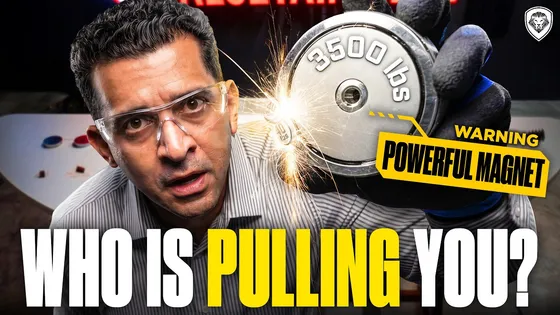
Bet-David's magnet stunt is really a sermon about proximity, but the SpaceX example is the number that makes you stop and check the math.
Patrick Bet-David says robots will make sports teams more valuable because fans will pay more to watch humans
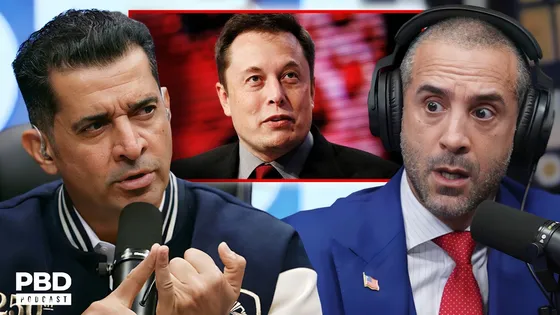
The PBD panel was reacting to Elon Musk’s sci-fi future reel, but the sharpest business take was about why the robot age may be great for the Cowboys, Lakers, and UFC.
Adam Sosnick says the Lindsay Clancy case is the new prenup
The PBD panel turned the Clancy mistrial into a brutal dating question, and the answer they want is not subtle.
The circuit, read weekly. No noise.